Japanese Through Stories

Japanese Through Stories

JTS #0238 What Kind of Wind Is Kogarashi?|木枯らしって、どんな風?

What is Kogarashi? On their way home from school, Sakura and Sumire feel a cold wind that signals the approach of winter. Sakura wonders if “Kogarashi” is a wind that makes trees wither. As they talk about changing seasons and yesterday's clothes shopping in Shibuya, discover a Japanese seasonal expression through a warm, playful conversation in English, Japanese, and Romaji.
Japanese Through Stories

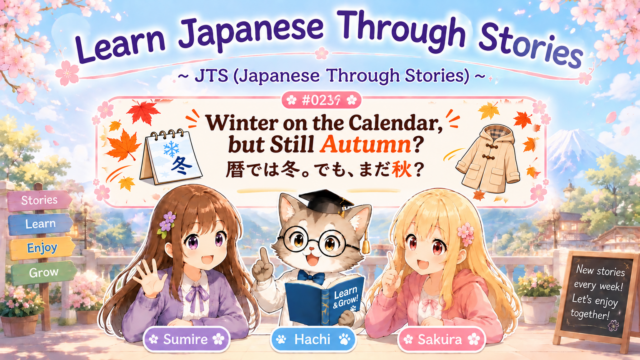
JTS #0237 Winter on the Calendar, but Still Autumn?|暦では冬。でも、まだ秋?

The calendar says winter has begun in Japan, but it still feels like autumn! After school, Sumire takes Sakura shopping for clothes in Shibuya. Should they choose autumn clothes or winter clothes? Enjoy a warm, playful conversation about seasonal changes, everyday fashion, and the gap between the calendar and the weather, while learning Japanese through English, Japanese, and Romaji.
Japanese Through Stories

JTS #0236 Tomorrow Is Rittō. Is It Winter Already?|明日は立冬。もう冬なの?

Tomorrow is Rittō (立冬), the traditional beginning of winter in the Japanese calendar. But does that mean autumn is already over? Join Sakura, Sumire, and Hachi for a gentle conversation about Japan's seasons, autumn leaves, and roasted sweet potatoes. 🍁🍠
Japanese Through Stories

JTS #0235 Isn’t It Getting Dark Earlier?|夕方、暗くなるの早くない?

Isn’t it getting dark earlier? 🍂 Sakura and Sumire notice how quickly evening comes in autumn. Why does the day feel shorter, even though a day is still 24 hours long? Hachi joins them for a little talk about shorter days and longer nights in Japan.
Japanese Through Stories

JTS #0234 What Is an Autumn Sky Like?|秋晴れって、どんな空?

What does “akibare” (秋晴れ) mean? Sakura and Sumire look up at the clear blue sky and wonder why Japanese has a special word for a sunny autumn day. Enjoy a gentle conversation about the seasons, the sky, and the beauty of everyday Japanese.
Japanese Through Stories

JTS #0233 What Do We Do on Culture Day?|文化の日って、何をする日?

It’s Culture Day in Japan! 🇯🇵 Sakura wonders what people are supposed to do on this national holiday. Visiting an art museum or reading a book sounds nice, but what about relaxing at home with music and tea? Join Sakura and Sumire for a cozy, lighthearted conversation about enjoying Culture Day in their own way, while learning Japanese through English, Japanese, and Romaji.
Japanese Through Stories

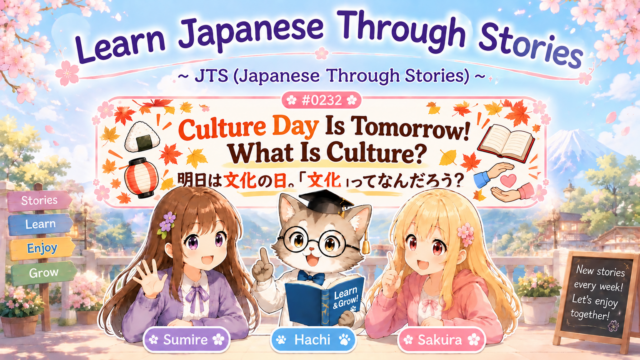
JTS #0232 Culture Day Is Tomorrow! What Is Culture?|明日は文化の日。「文化」ってなんだろう?

Tomorrow is Culture Day in Japan! 🇯🇵 During class, Sakura asks Hachi-sensei, “What is culture?” Later, Sakura and Sumire talk about everyday traditions, from onigiri and miso soup to helping others, festivals, and local fairs. Discover how culture can be found in ordinary life while enjoying a warm Japanese conversation with English translations and Romaji.
Japanese Through Stories

JTS #0231 Halloween Is Tomorrow! Pumpkins: Eat or Decorate?|明日はハロウィン。かぼちゃは食べる?飾る?

Halloween is tomorrow! 🎃 On their way home from school, Sakura and Sumire find a big pumpkin decoration in a shopping street. Sakura wonders if people eat pumpkins after using them as decorations. But her thoughts soon turn to a familiar Japanese dish: simmered pumpkin! Enjoy a lighthearted autumn conversation while learning Japanese through English, Japanese, and Romaji.
Japanese Through Stories

JTS #0230 Sumire’s Cat Punch|すみれの猫パンチ

Why does a restaurant announce that it will call customers by number before calling the first number? Sakura’s innocent question leads to Sumire’s playful cat punch! Dad shares a little wisdom about helping people get ready to listen, while Hachi-sensei arrives with his wife and an unexpected surprise. Discover a small act of consideration in everyday Japanese life through a fun story in English, Japanese, and Romaji.
Japanese Through Stories

JTS #0229 Are Momiji and Kaede the Same?|もみじとカエデって、同じなの?

Are momiji and kaede the same? During an autumn walk home from school, Sakura asks a curious question that even Sumire can’t answer. So Sumire turns to ChatGPT! Discover two Japanese names connected to maple trees through a playful conversation, with English, Japanese, and Romaji.