📕 はじめに|A small beginning
ことばをたどっていくと、
その奥にある暮らしや祈りに、
ふと出会うことがある。
その奥にある暮らしや祈りに、
ふと出会うことがある。
When you follow a word,
you sometimes find the life and prayers
quietly resting behind it.
you sometimes find the life and prayers
quietly resting behind it.
📚 今日も、隣で|Today, by your side
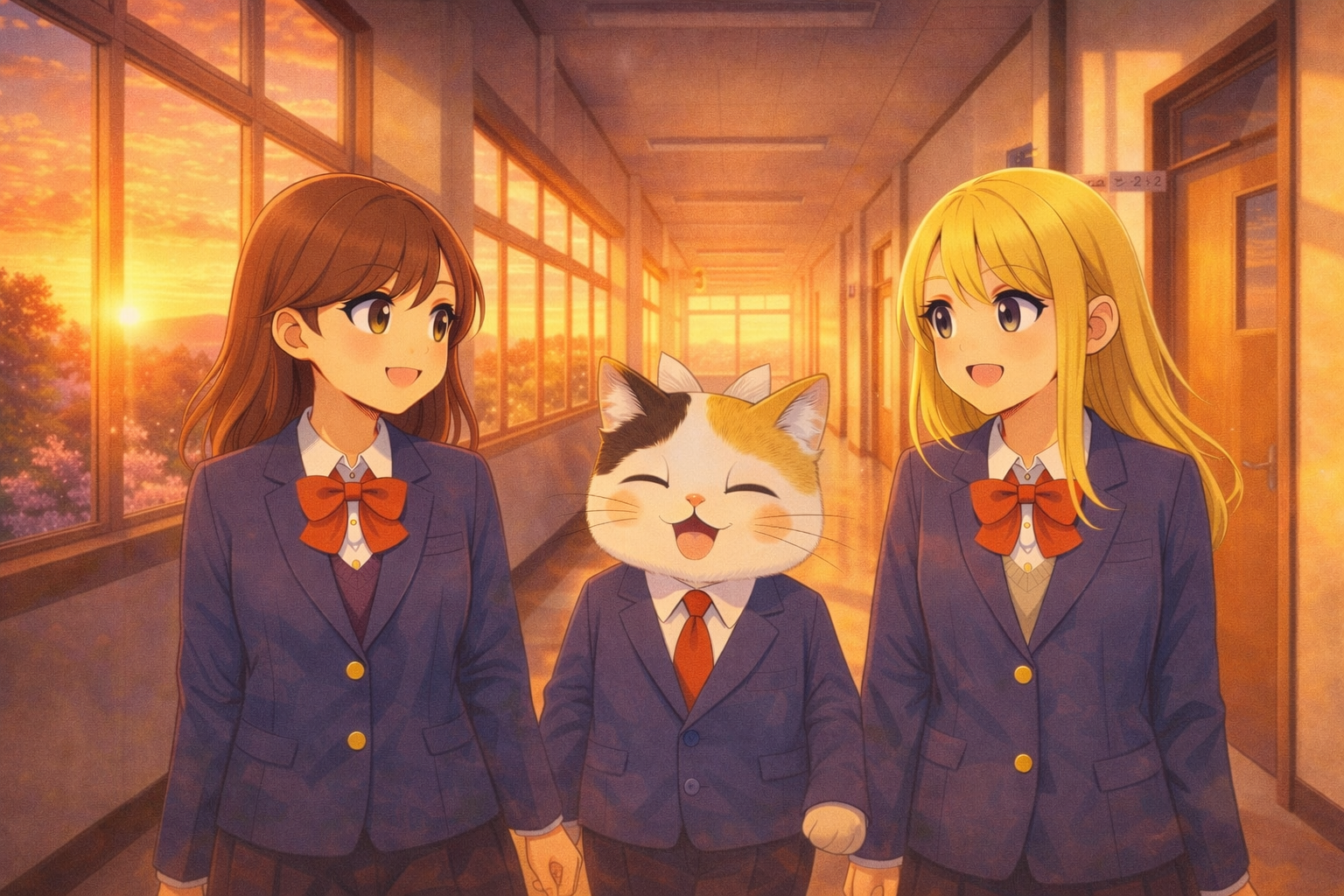
学校の校門まで、歩いている途中
On the way to the school gate
ねぇ、すみれ。
Hey, Sumire.
なに?
What is it?
この前話してた
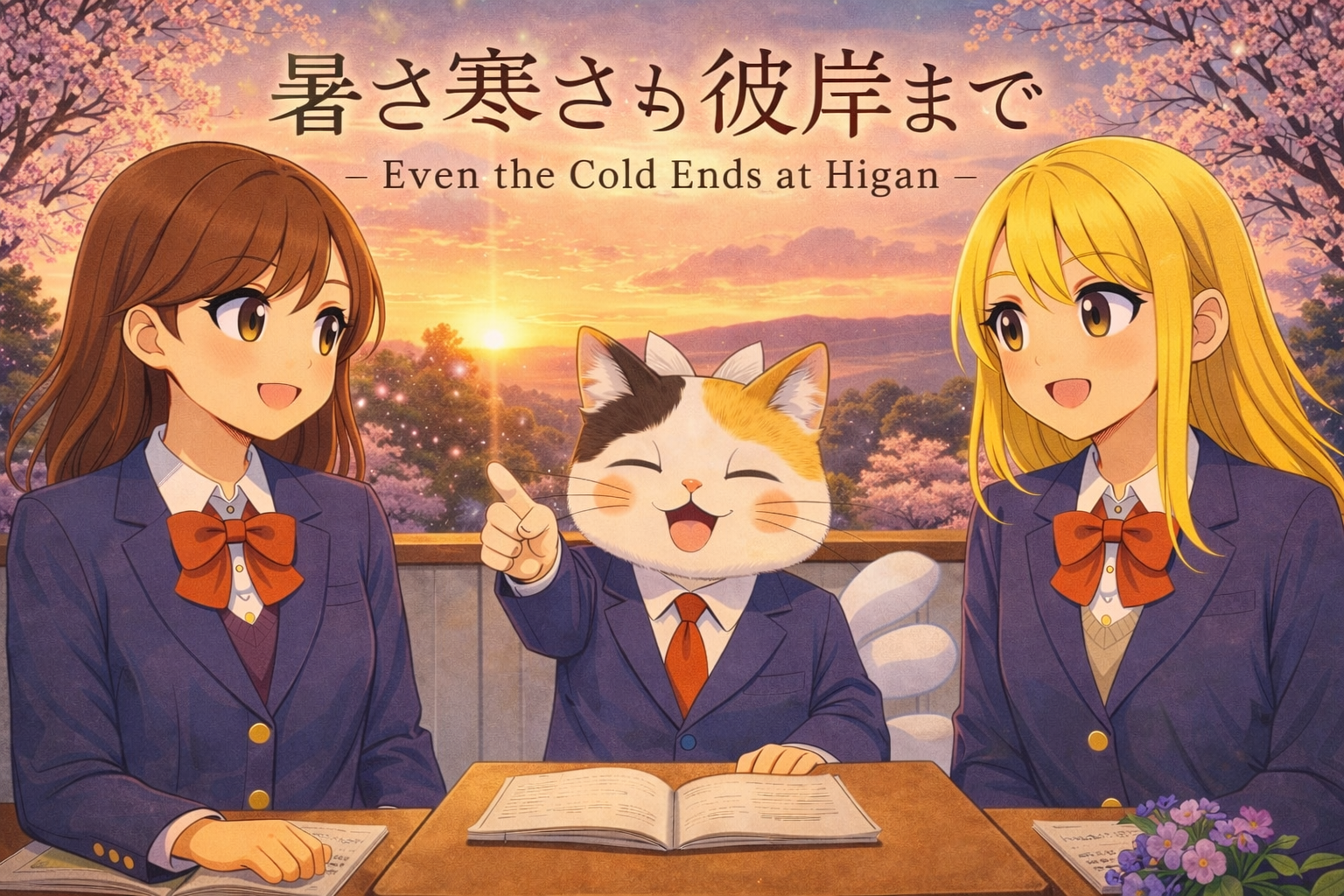
「暑さ寒さも彼岸まで」ってあるでしょ。
「暑さ寒さも彼岸まで」ってあるでしょ。
You know the saying we talked about before,
“Even the heat and cold last only until Higan”?
“Even the heat and cold last only until Higan”?
うん。
Yeah.
でもさ。
But, you know…
うん?
Hm?
彼岸って、
そもそも何なんだろう。
そもそも何なんだろう。
What exactly is Higan,
anyway?
anyway?
……たしかに。
…Good question.
春分の日と
関係ありそうだけど。
関係ありそうだけど。
It seems like it has something to do
with the spring equinox, though.
with the spring equinox, though.
なんとなく、
そんな感じするよね。
そんな感じするよね。
Yeah,
it does feel that way somehow.
it does feel that way somehow.
ハチ先生のひとこと
A word from Professor Hachi
それはね、
仏教の言葉にゃ。
仏教の言葉にゃ。
Well,
it’s a Buddhist word, meow.
it’s a Buddhist word, meow.
え、仏教?
Oh, Buddhism?
でも日本では、
季節の行事として
広まったにゃ。
季節の行事として
広まったにゃ。
But in Japan,
it spread as a seasonal custom,
meow.
it spread as a seasonal custom,
meow.
お墓参りとか?
Like visiting family graves?
そうにゃ。
That’s right, meow.
なるほど。
I see.
昔の人は、
季節と生活が
繋がってたんだね。
季節と生活が
繋がってたんだね。
People long ago
really lived with the seasons
woven into their daily lives.
really lived with the seasons
woven into their daily lives.
📘 最後に|Afterword
ことばの意味をたどっていくと、
その奥には、暮らしや祈りの形が見えてくる。
お彼岸もまた、
季節の中で受け継がれてきた
静かな時間なのかもしれない。
その奥には、暮らしや祈りの形が見えてくる。
お彼岸もまた、
季節の中で受け継がれてきた
静かな時間なのかもしれない。
When you trace the meaning of a word,
you begin to see the shape of everyday life and prayer behind it.
Higan, too,
may be one of those quiet traditions
passed down through the seasons.
you begin to see the shape of everyday life and prayer behind it.
Higan, too,
may be one of those quiet traditions
passed down through the seasons.

コメント