📕 はじめに|A small beginning
冷たい麺の横には、
小さな器のつゆがある。
目立つわけではないけれど、
その味があるから、
麺はもっとおいしくなる。
かつお。
昆布。
そして、合わせだし。
今日は、つゆから始まる、
夏の小さな会話。
小さな器のつゆがある。
目立つわけではないけれど、
その味があるから、
麺はもっとおいしくなる。
かつお。
昆布。
そして、合わせだし。
今日は、つゆから始まる、
夏の小さな会話。
Beside cold noodles,
there is a small bowl of dipping sauce.
It may not stand out,
but because of its flavor,
the noodles taste even better.
Katsuobushi.
Kombu.
And a blended soup base.
Today’s small summer conversation
begins with the dipping sauce.
there is a small bowl of dipping sauce.
It may not stand out,
but because of its flavor,
the noodles taste even better.
Katsuobushi.
Kombu.
And a blended soup base.
Today’s small summer conversation
begins with the dipping sauce.
📚 今日も、隣で|Today, by your side
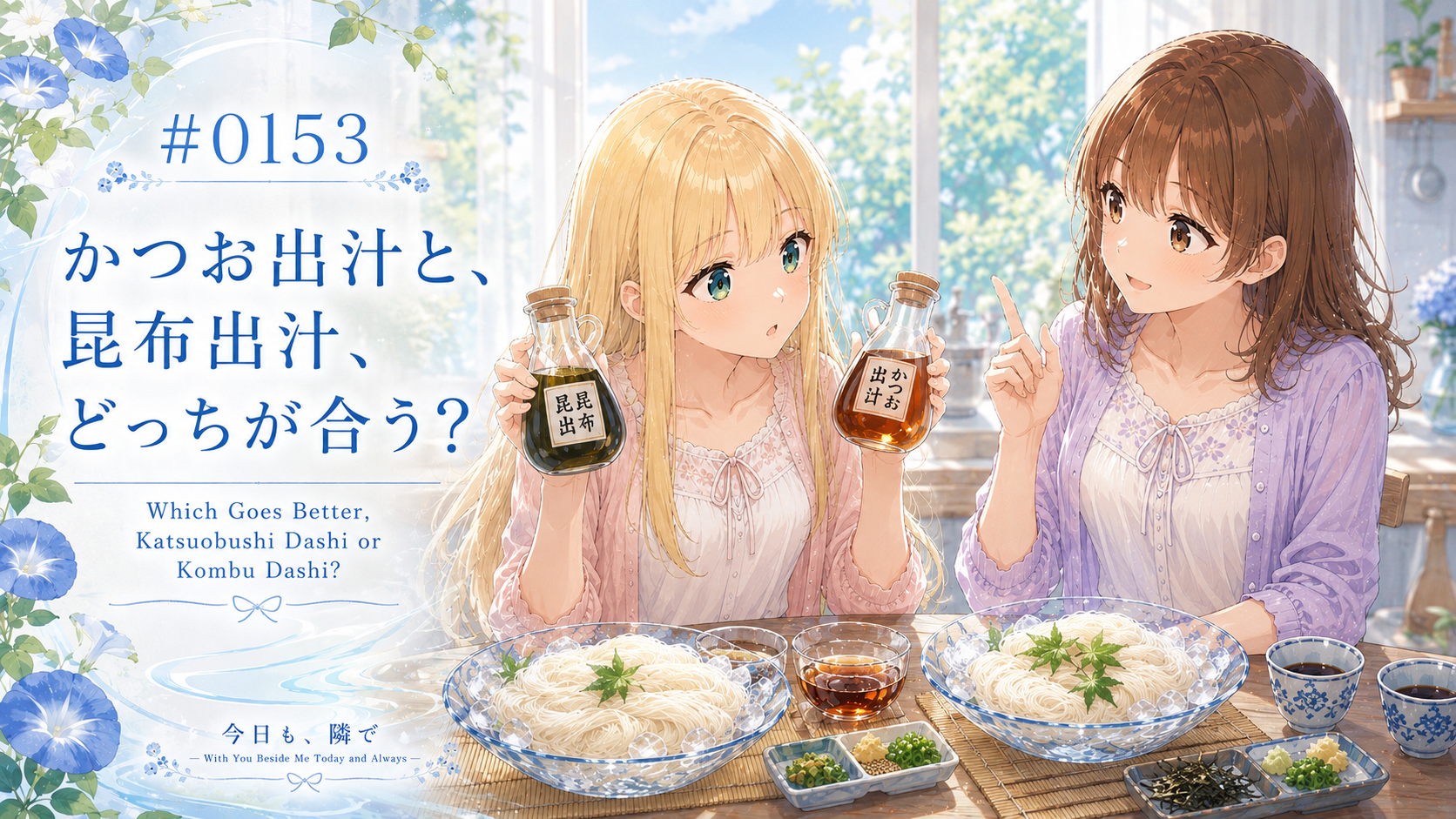
夏のお昼。テーブルには、冷たいそうめんと、小さな器のつゆが置かれていた。
A summer lunch. Cold somen and a small bowl of dipping sauce were on the table.
ねぇ、すみれ。
Hey, Sumire.
なに?
What?
つゆってさ。
Dipping sauce, you know.
うん。
Yes?
かつおなの?
昆布なの?
昆布なの?
Is it katsuobushi?
Or is it kombu?
Or is it kombu?
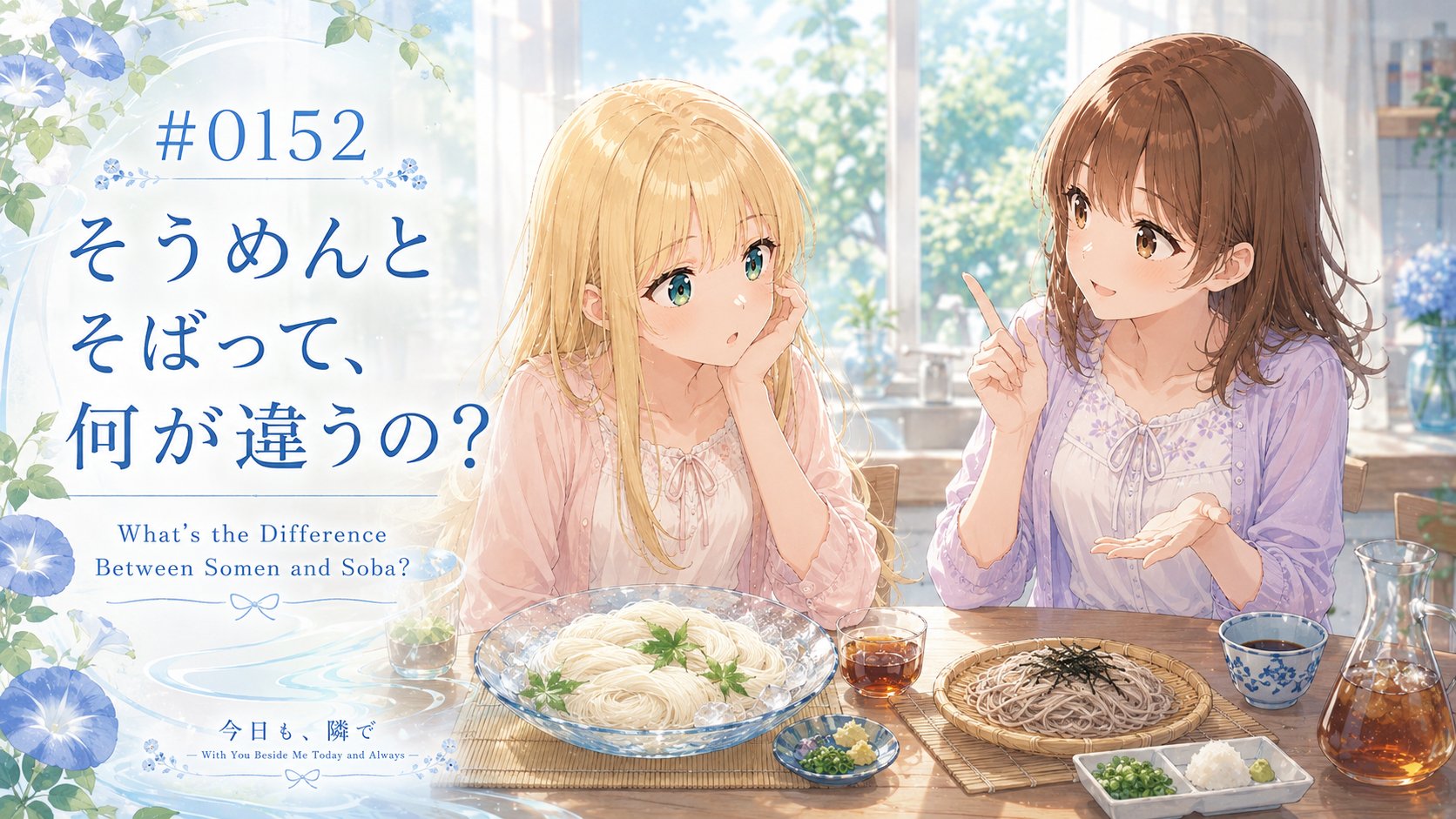
昨日の続きだね。
This is a continuation from yesterday.
うん。
つゆにも違いがあるって言ってたから。
つゆにも違いがあるって言ってたから。
Yes.
You said there are differences in the sauce, too.
You said there are differences in the sauce, too.
かつおは、香りがはっきりしていて、
昆布は、旨みがやさしく出る感じかな。
昆布は、旨みがやさしく出る感じかな。
Katsuobushi has a clearer aroma,
and kombu gives a gentler umami flavor.
and kombu gives a gentler umami flavor.
かつおは、きりっ。
昆布は、ほわっ。
昆布は、ほわっ。
Katsuobushi is sharp.
Kombu is soft.
Kombu is soft.
……感覚としては、少し近いかも。
…As a feeling, that may be a little close.
じゃあ、どっちが正解?
Then which one is correct?
どちらも正解。
それに、混ぜることもあるよ。
それに、混ぜることもあるよ。
Both are correct.
And sometimes, they are mixed.
And sometimes, they are mixed.
混ぜるの?
They are mixed?
うん。
かつおと昆布を合わせると、
香りと旨みのバランスがよくなるの。
かつおと昆布を合わせると、
香りと旨みのバランスがよくなるの。
Yes.
When katsuobushi and kombu are combined,
the aroma and umami become well balanced.
When katsuobushi and kombu are combined,
the aroma and umami become well balanced.
いいとこ取りだ。
It takes the best parts of both.
言い方は軽いけど、
だいたいそう。
だいたいそう。
That sounds casual,
but basically, yes.
but basically, yes.
じゃあ、今日のつゆは?
Then what is today’s sauce?
今日は、かつおと昆布の合わせだし。
Today, it is a blended soup base
with katsuobushi and kombu.
with katsuobushi and kombu.
仲良しつゆ。
A friendly sauce.
その名前では出さない。
We are not serving it under that name.
えー。
かわいいのに。
かわいいのに。
Aww.
But it sounds cute.
But it sounds cute.
かわいいけど、
料理名としては少しゆるいかな。
料理名としては少しゆるいかな。
It is cute,
but it may be a little too loose as a dish name.
but it may be a little too loose as a dish name.
でもさ。
つゆって、麺につけるだけなのに、
けっこう大事なんだね。
つゆって、麺につけるだけなのに、
けっこう大事なんだね。
But you know,
even though we only dip noodles in it,
the sauce is pretty important.
even though we only dip noodles in it,
the sauce is pretty important.
うん。
麺の味を、そっと支えてくれるからね。
麺の味を、そっと支えてくれるからね。
Yes.
It gently supports the flavor of the noodles.
It gently supports the flavor of the noodles.
主役じゃないけど、
いないと困る人みたい。
いないと困る人みたい。
It is not the main character,
but it is like someone we would miss if they were not there.
but it is like someone we would miss if they were not there.
それは、いい言い方。
That is a nice way to say it.
じゃあ、そうめんも、
つゆに支えられてるんだ。
つゆに支えられてるんだ。
Then somen is also
supported by the sauce.
supported by the sauce.
うん。
そして、薬味が入ると、
また少し変わるよ。
そして、薬味が入ると、
また少し変わるよ。
Yes.
And when yakumi is added,
it changes a little again.
And when yakumi is added,
it changes a little again.
薬味?
Yakumi?
ねぎとか、しょうがとか。
Green onion, ginger, and things like that.
あ、それも気になる。
Oh, now I am curious about that, too.
📘 最後に|Afterword
つゆは、
麺の横にそっと置かれている。
でも、その味があるから、
そうめんも、そばも、
夏のお昼の味になる。
かつおの香り。
昆布のやさしい旨み。
混ざることで生まれる、
ちょうどいいバランス。
主役ではないものが、
主役を支えている。
そんな味の関係も、
夏の食卓には、
静かに並んでいるのかもしれない。
麺の横にそっと置かれている。
でも、その味があるから、
そうめんも、そばも、
夏のお昼の味になる。
かつおの香り。
昆布のやさしい旨み。
混ざることで生まれる、
ちょうどいいバランス。
主役ではないものが、
主役を支えている。
そんな味の関係も、
夏の食卓には、
静かに並んでいるのかもしれない。
The dipping sauce
sits quietly beside the noodles.
But because of its flavor,
somen and soba
become the taste of a summer lunch.
The aroma of katsuobushi.
The gentle umami of kombu.
The balance that comes
when they are blended together.
Something that is not the main character
can still support the main character.
That kind of relationship in flavor
may be quietly sitting
on the summer table, too.
sits quietly beside the noodles.
But because of its flavor,
somen and soba
become the taste of a summer lunch.
The aroma of katsuobushi.
The gentle umami of kombu.
The balance that comes
when they are blended together.
Something that is not the main character
can still support the main character.
That kind of relationship in flavor
may be quietly sitting
on the summer table, too.
コメント