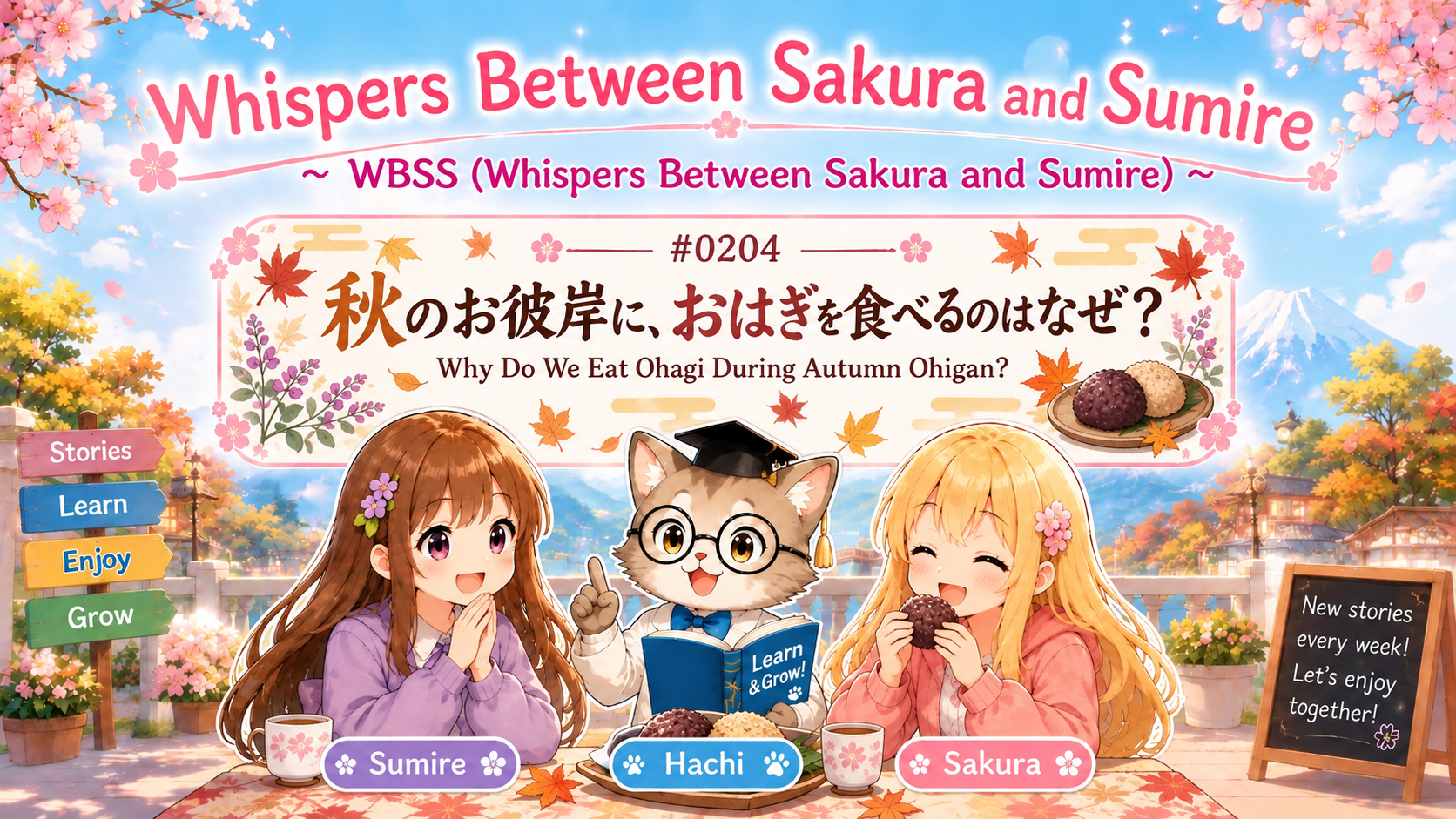
📕 はじめに|A small beginning
テーブルの上には、
おはぎ。
秋のお彼岸といえば、
なんとなく見慣れた風景だけど、
どうして、
お彼岸におはぎを食べるんだろう?
今日は、
そんな素朴な疑問から始まるお話です。
There is ohagi
on the table.
Ohagi is a familiar sight
during autumn Ohigan in Japan.
But why do people
eat ohagi during Ohigan?
Today’s story begins
with that simple question.
ゼア イズ オハギ
オン ザ テーブル。
オハギ イズ ア ファミリア サイト
デューリング オータム オヒガン イン ジャパン。
バット ホワイ ドゥ ピープル
イート オハギ デューリング オヒガン?
トゥデイズ ストーリー ビギンズ
ウィズ ザット シンプル クエスチョン。
ネイティブの発音とは少し違うこともあります。
音声と一緒に、「あ、こんなふうに聞こえるんだ」と楽しんでみてください。
📚 今日も、隣で|Today, by your side
テーブルの上には、おはぎ。
There is ohagi on the table.
ゼア イズ オハギ オン ザ テーブル。


嬉しそうだね。
you look happy.
ユー ルック ハッピー。
……あれ?
…Wait.
……ウェイト。
なんでお彼岸に
おはぎを食べるんだろう?
why do we eat ohagi
during Ohigan?
ホワイ ドゥ ウィー イート オハギ
デューリング オヒガン?
言われてみれば。
Now that you mention it.
ナウ ザット ユー メンション イット。

昔から日本では、
小豆の赤い色には、
災いを遠ざける力があると
考えられてきたにゃ。
For a long time in Japan,
people believed that
the red color of azuki beans
could ward off misfortune, nya.
フォー ア ロング タイム イン ジャパン、
ピープル ビリーヴド ザット
ザ レッド カラー オブ アズキ ビーンズ
クッド ウォード オフ ミスフォーチュン、ニャ。
昔は砂糖やお米も貴重だったにゃ。
sugar and rice were precious
in the past, nya.
シュガー アンド ライス ワー プレシャス
イン ザ パスト、ニャ。
小豆とお米を使ったものを
ご先祖さまにお供えして、
感謝の気持ちを表したと
いわれているにゃ。
people offered food made with
azuki beans and rice
to their ancestors
to show their gratitude, nya.
ピープル オファード フード メイド ウィズ
アズキ ビーンズ アンド ライス
トゥ ゼア アンセスターズ
トゥ ショウ ゼア グラティテュード、ニャ。
お彼岸におはぎなんだね。
we eat ohagi during Ohigan.
ウィー イート オハギ デューリング オヒガン。
春のお彼岸にも、
同じの食べるよね?
We eat the same thing
during spring Ohigan too, right?
ウィー イート ザ セイム シング
デューリング スプリング オヒガン トゥー、ライト?
ぼたもち?
Botamochi?
ボタモチ?
おはぎと、
ぼたもちって違うの?
Are ohagi
and botamochi different?
アー オハギ
アンド ボタモチ ディファレント?
基本的には同じものにゃ。
they’re basically the same thing, nya.
ゼア ベイシカリー ザ セイム シング、ニャ。
じゃあ、
なんで名前が違うの?
Then,
why do they have different names?
ゼン、
ホワイ ドゥ ゼイ ハヴ ディファレント ネイムズ?
「ぼたもち」。
秋に咲く萩から
「おはぎ」。
季節の花にちなんで
呼び分けられてきたにゃ。
botan, the peony that blooms in spring.
“Ohagi” comes from
hagi, the bush clover that blooms in autumn.
The names have traditionally changed
with the seasonal flowers, nya.
ボタン、ザ ピオニー ザット ブルームズ イン スプリング。
“オハギ” カムズ フロム
ハギ、ザ ブッシュ クローヴァー ザット ブルームズ イン オータム。
ザ ネイムズ ハヴ トラディショナリー チェインジド
ウィズ ザ シーズナル フラワーズ、ニャ。
名前にも
季節があるんだね😊
Even the names
have their own seasons. 😊
イーヴン ザ ネイムズ
ハヴ ゼア オウン シーズンズ。😊
秋だから、
今日は「おはぎ」。
Since it’s autumn,
today it’s “ohagi.”
シンス イッツ オータム、
トゥデイ イッツ “オハギ”。
「ぼたもち」も食べなきゃね。
we’ll have to eat “botamochi” too.
ウィール ハヴ トゥ イート “ボタモチ” トゥー。
食べたいだけでしょ💦
you just want to eat it, don’t you? 💦
ユー ジャスト ウォント トゥ イート イット、ドント ユー? 💦
🔰 ことばを混ぜて、感覚をつかもう|Mix Words and Feel Their Meaning
「お供え」。
英語では、
offering
と表すことができます。
たとえば、
「ご先祖さまに offering をする。」
「お花を offering として置く。」
「これは、お彼岸の offering なんだね。」
こんなふうに、
いつもの日本語の中へ
offering を混ぜてみます。
offering は、
ただ何かを置くというだけではなく、
誰かを思ったり、
敬う気持ちや、
感謝の気持ちを込めて
差し出すもの。
「何のための offering なのかな?」
そう考えてみると、
「お供え」の感覚が
少しつかみやすくなるかもしれないね。
Try mixing “offering”
into your everyday Japanese.
The goal is not to make perfect English.
Think about what an offering means.
It is not simply something that is placed somewhere.
An offering can be connected with
remembering someone,
showing respect,
and expressing gratitude.
If you can think about
why something is given as an “offering,”
you may begin to feel
the meaning of 「お供え」.
トライ ミキシング “オファリング”
イントゥ ユア エヴリデイ ジャパニーズ。
ザ ゴール イズ ノット トゥ メイク パーフェクト イングリッシュ。
シンク アバウト ワット アン オファリング ミーンズ。
イット イズ ノット シンプリー サムシング
ザット イズ プレイスト サムウェア。
アン オファリング キャン ビー コネクテッド ウィズ
リメンバリング サムワン、
ショウイング リスペクト、
アンド エクスプレッシング グラティテュード。
イフ ユー キャン シンク アバウト
ワイ サムシング イズ ギヴン アズ アン “オファリング”、
ユー メイ ビギン トゥ フィール
ザ ミーニング オブ 「オソナエ」。
📘 最後に|Afterword
春には「ぼたもち」、
秋には「おはぎ」。
同じように見えるものでも、
季節によって呼び方が変わることがあります。
牡丹と萩。
食べものの名前の中にも、
季節の花がそっと残っているんだね。
In spring, it is called “botamochi.”
In autumn, it is called “ohagi.”
Even when the food is basically the same,
the name can change with the season.
Peonies and bush clover.
Even in the names of food,
seasonal flowers can quietly remain.
イン スプリング、イット イズ コールド “ボタモチ”。
イン オータム、イット イズ コールド “オハギ”。
イーヴン ウェン ザ フード イズ ベイシカリー ザ セイム、
ザ ネイム キャン チェインジ ウィズ ザ シーズン。
ピオニーズ アンド ブッシュ クローヴァー。
イーヴン イン ザ ネイムズ オブ フード、
シーズナル フラワーズ キャン クワイエットリー リメイン。
コメント