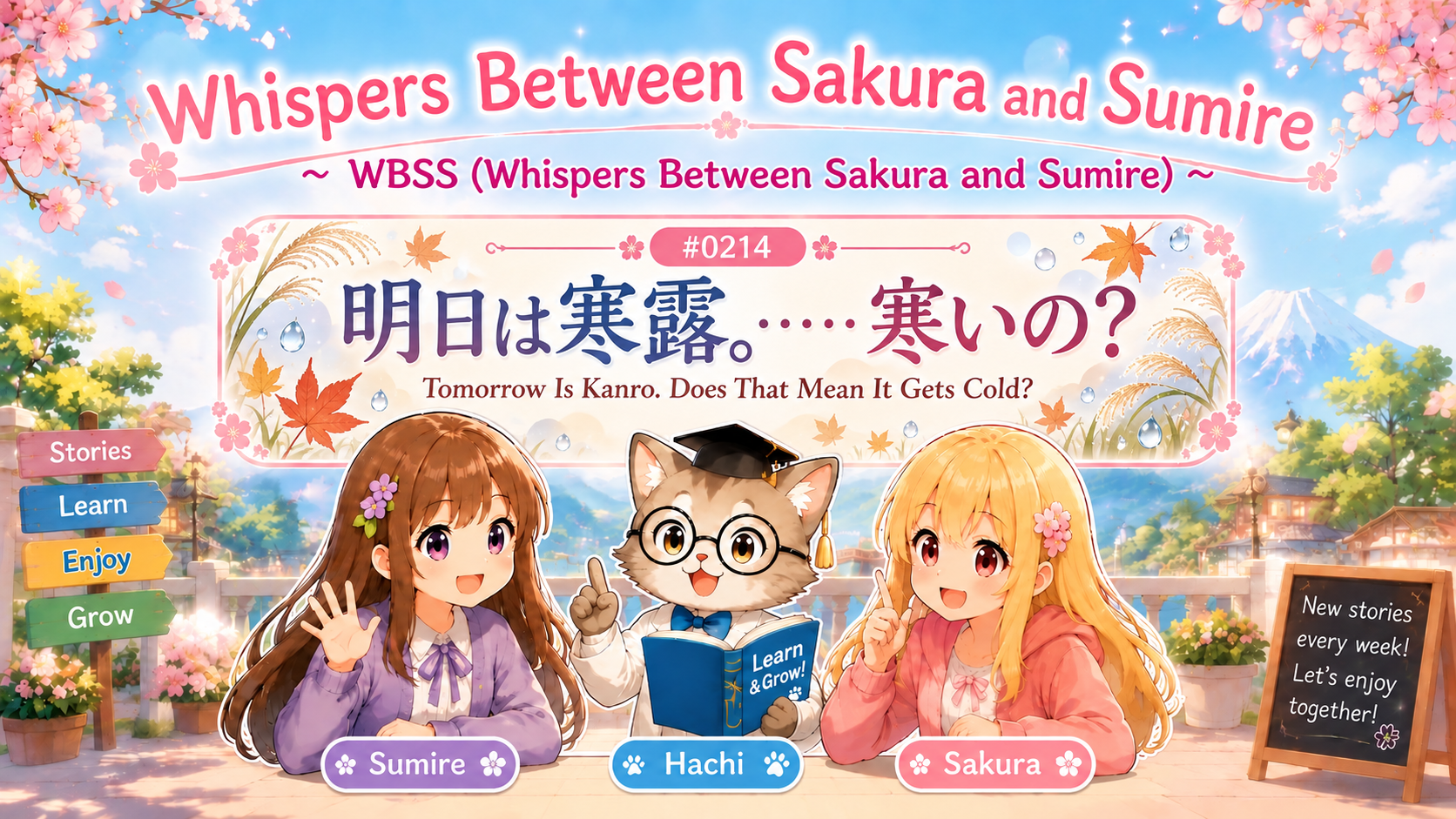
📕 はじめに|A small beginning
ときどき、
見慣れない季節のことばが
書かれています。
「寒露」も、
そんなことばのひとつ。
漢字を見ると、
なんとなく意味を想像できそうだけど……
実際には、
どんな季節を表しているのでしょう。
今日は、
カレンダーで見つけた
小さな疑問から始まります。
you may sometimes find
seasonal words
that are not used very often
in everyday conversation.
“Kanro” is one of them.
Looking at the kanji,
you might be able to guess
what it means…
But what kind of season
does it actually describe?
Today’s story begins
with a small question
found on a calendar.
ユー メイ サムタイムズ ファインド
シーズナル ワーズ
ザット アー ノット ユーズド ベリー オーフン
イン エブリデイ カンヴァセイション.
“カンロ” イズ ワン オブ ゼム.
ルッキング アット ザ カンジ,
ユー マイト ビー エイブル トゥ ゲス
ワット イット ミーンズ…
バット ワット カインド オブ シーズン
ダズ イット アクチュアリー ディスクライブ?
トゥデイズ ストーリー ビギンズ
ウィズ ア スモール クエスチョン
ファウンド オン ア カレンダー.
ネイティブの発音とは少し違うこともあります。
音声と一緒に、「あ、こんなふうに聞こえるんだ」と楽しんでみてください。
📚 今日も、隣で|Today, by your side
カレンダーを見ている。
are looking at a calendar.
アー ルッキング アット ア カレンダー.

「寒露」って書いてある。
on tomorrow’s date.
オン トゥモロウズ デイト.

どういう意味なんだろう?
what it means.
ワット イット ミーンズ.
そんな感じだよね。
it does sound like that.
イット ダズ サウンド ライク ザット.
寒くなるってこと?💦
it’ll get cold starting tomorrow? 💦
イトゥル ゲット コールド スターティング トゥモロウ? 💦

二十四節気のひとつだにゃ。
one of the twenty-four seasonal divisions, nya.
ワン オブ ザ トゥエンティフォー シーズナル ディヴィジョンズ, ニャ.
草や葉につく露にも
冷たさを感じる頃を表しているにゃ。
when mornings and evenings get cooler,
and even the dew on grass and leaves feels cold, nya.
ウェン モーニングズ アンド イーブニングズ ゲット クーラー,
アンド イーブン ザ デュー オン グラス アンド リーブズ フィールズ コールド, ニャ.
っていう意味じゃないんだ。
“It gets cold starting tomorrow!”
“イット ゲッツ コールド スターティング トゥモロウ!”
秋から冬へ向かっている、
そんな変化を表す言葉なんだにゃ。
as the season moves
from autumn toward winter, nya.
アズ ザ シーズン ムーブズ
フロム オータム トゥウォード ウィンター, ニャ.
季節の小さな変化を
ちゃんと見てたんだね。
really noticed
the little changes in the seasons.
リアリー ノウティスト
ザ リトル チェインジズ イン ザ シーズンズ.
季節の途中経過が書いてあるみたい😊
shows us how the season is changing along the way. 😊
ショウズ アス ハウ ザ シーズン イズ チェインジング アロング ザ ウェイ. 😊
🔰 ことばを混ぜて、感覚をつかもう|Mix Words and Feel Their Meaning
「つまり、こういう意味?」
と確認したいときに使う表現です。
英語では、
Does that mean…?
の感覚に近いことがあります。
たとえば、
「明日は休み Does that mean…?」
「もう終わり Does that mean…?」
みたいに、
日本語の中へ英語を混ぜてみると、
“意味を確認する”
という感覚がつかみやすくなります。
is often used
when you want to check
what something means.
In Japanese,
「ってこと?」 can have
a similar feeling.
Try mixing the expression
into Japanese sentences
and feel how it works
when you want to confirm
your understanding.
イズ オーフン ユーズド
ウェン ユー ウォント トゥ チェック
ワット サムシング ミーンズ.
イン ジャパニーズ,
「ってこと?」 キャン ハヴ
ア シミラー フィーリング.
トライ ミキシング ジ エクスプレッション
イントゥ ジャパニーズ センテンシズ
アンド フィール ハウ イット ワークス
ウェン ユー ウォント トゥ コンファーム
ユア アンダースタンディング.
📘 最後に|Afterword
たった二文字の「寒露」。
急に寒くなる日、
というわけではなくて、
少し冷たくなった空気や、
草や葉につく露から、
季節が少しずつ
進んでいることを感じる頃。
昔の人は、
そんな小さな変化にも
名前をつけていたんですね。
いつものカレンダーも、
少し違って見えるかもしれません😊
on a calendar:
“Kanro.”
It does not mean
that the weather suddenly
turns cold on that day.
It is a time when
cooler air
and dew on grass and leaves
can make us notice
that the season is slowly changing.
People long ago
gave names
even to these small changes.
Maybe an ordinary calendar
can look a little different
once we notice them. 😊
オン ア カレンダー:
“カンロ.”
イット ダズ ノット ミーン
ザット ザ ウェザー サドゥンリー
ターンズ コールド オン ザット デイ.
イット イズ ア タイム ウェン
クーラー エア
アンド デュー オン グラス アンド リーブズ
キャン メイク アス ノウティス
ザット ザ シーズン イズ スローリー チェインジング.
ピープル ロング アゴー
ゲイヴ ネイムズ
イーブン トゥ ジーズ スモール チェインジズ.
メイビー アン オーディナリー カレンダー
キャン ルック ア リトル ディファレント
ワンス ウィー ノウティス ゼム. 😊
コメント