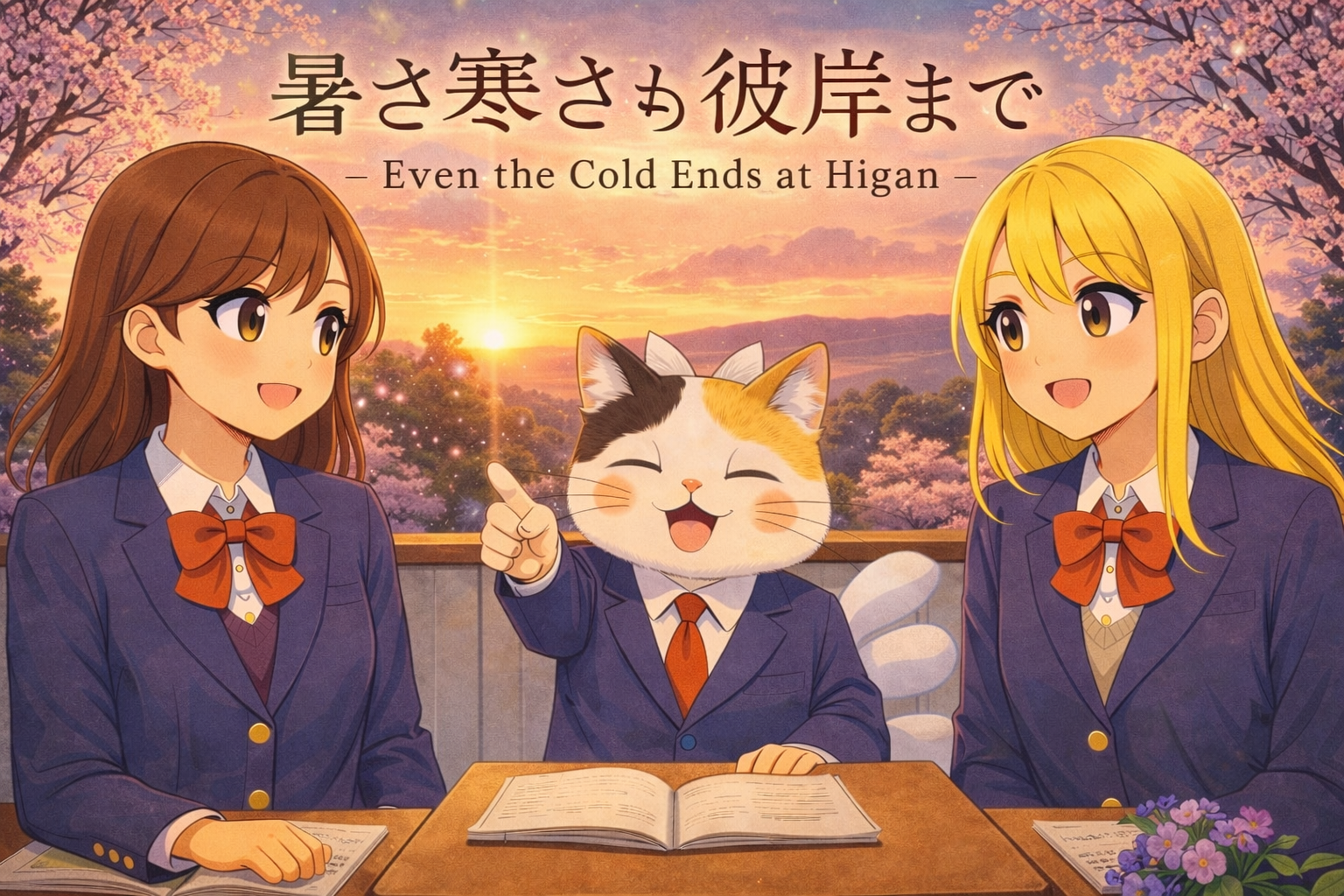
📕 はじめに|A small beginning
ことばの中には、
昔の人が季節を見つめてきた跡が、
そっと残っている。
昔の人が季節を見つめてきた跡が、
そっと残っている。
In old sayings,
you can still find traces of how people long ago
quietly watched the seasons.
you can still find traces of how people long ago
quietly watched the seasons.
📚 今日も、隣で|Today, by your side
春分の日から少しして
A little after the spring equinox
最近さ、
ほんと暖かくなってきたね。
ほんと暖かくなってきたね。
Lately,
it’s really getting warmer, isn’t it?
it’s really getting warmer, isn’t it?
うん。
春って感じ。
春って感じ。
Yeah.
It really feels like spring.
It really feels like spring.
そういえばさ。
That reminds me.
なに?
What is it?
「暑さ寒さも彼岸まで」
って言葉あるじゃない?
って言葉あるじゃない?
You know the saying,
“Even the cold ends at Higan,” right?
“Even the cold ends at Higan,” right?
あるね。
Yeah, I do.
あれって、
ほんとにそうなるよね。
ほんとにそうなるよね。
It really does feel true,
doesn’t it?
doesn’t it?
昔の人って、
どうしてわかったんだろう。
どうしてわかったんだろう。
I wonder how people long ago
knew that.
knew that.
ハチ先生のひとこと
A word from Professor Hachi
それは観察にゃ。
That was observation, meow.
観察?
Observation?
昔の人は、
太陽の動きを毎日見ていたにゃ。
太陽の動きを毎日見ていたにゃ。
People long ago
watched the movement of the sun every day, meow.
watched the movement of the sun every day, meow.
毎日?
Every day?
季節の変化は
太陽の位置でわかるにゃ。
太陽の位置でわかるにゃ。
You can tell the change of seasons
by the position of the sun, meow.
by the position of the sun, meow.
あ、春分点。
Ah, the vernal equinox point.
そうにゃ。
Exactly, meow.
だから彼岸のころに
暖かくなるってわかったんだ。
暖かくなるってわかったんだ。
So that’s how they knew
it would get warmer around Higan.
it would get warmer around Higan.
すごいね。
That’s amazing.
科学がなくても
自然を見ていれば
気づけることもあるにゃ。
自然を見ていれば
気づけることもあるにゃ。
Even without science,
there are things you can notice
just by watching nature, meow.
there are things you can notice
just by watching nature, meow.
📘 最後に|Afterword
ことばの中には、
数字や理屈だけでは残らない、
暮らしの中の観察が息づいている。
「暑さ寒さも彼岸まで」も、
そんな知恵のひとつなのかもしれない。
数字や理屈だけでは残らない、
暮らしの中の観察が息づいている。
「暑さ寒さも彼岸まで」も、
そんな知恵のひとつなのかもしれない。
Some words carry more than facts and logic;
they hold the quiet observations of everyday life.
“Even the cold ends at Higan”
may be one of those small pieces of wisdom.
they hold the quiet observations of everyday life.
“Even the cold ends at Higan”
may be one of those small pieces of wisdom.


コメント