📕 はじめに|A small beginning
夏のお昼には、
冷たい麺がよく似合う。
そうめん。
そば。
どちらも細くて、
どちらも冷たくして食べられる。
でも、同じように見えても、
中身は少し違う。
今日は、そうめんとそばから始まる、
夏の小さな会話。
冷たい麺がよく似合う。
そうめん。
そば。
どちらも細くて、
どちらも冷たくして食べられる。
でも、同じように見えても、
中身は少し違う。
今日は、そうめんとそばから始まる、
夏の小さな会話。
Cold noodles
feel just right for a summer lunch.
Somen.
Soba.
Both are thin,
and both can be eaten cold.
But even when two things look similar,
they can be different inside.
Today’s small summer conversation
begins with somen and soba.
feel just right for a summer lunch.
Somen.
Soba.
Both are thin,
and both can be eaten cold.
But even when two things look similar,
they can be different inside.
Today’s small summer conversation
begins with somen and soba.
📚 今日も、隣で|Today, by your side
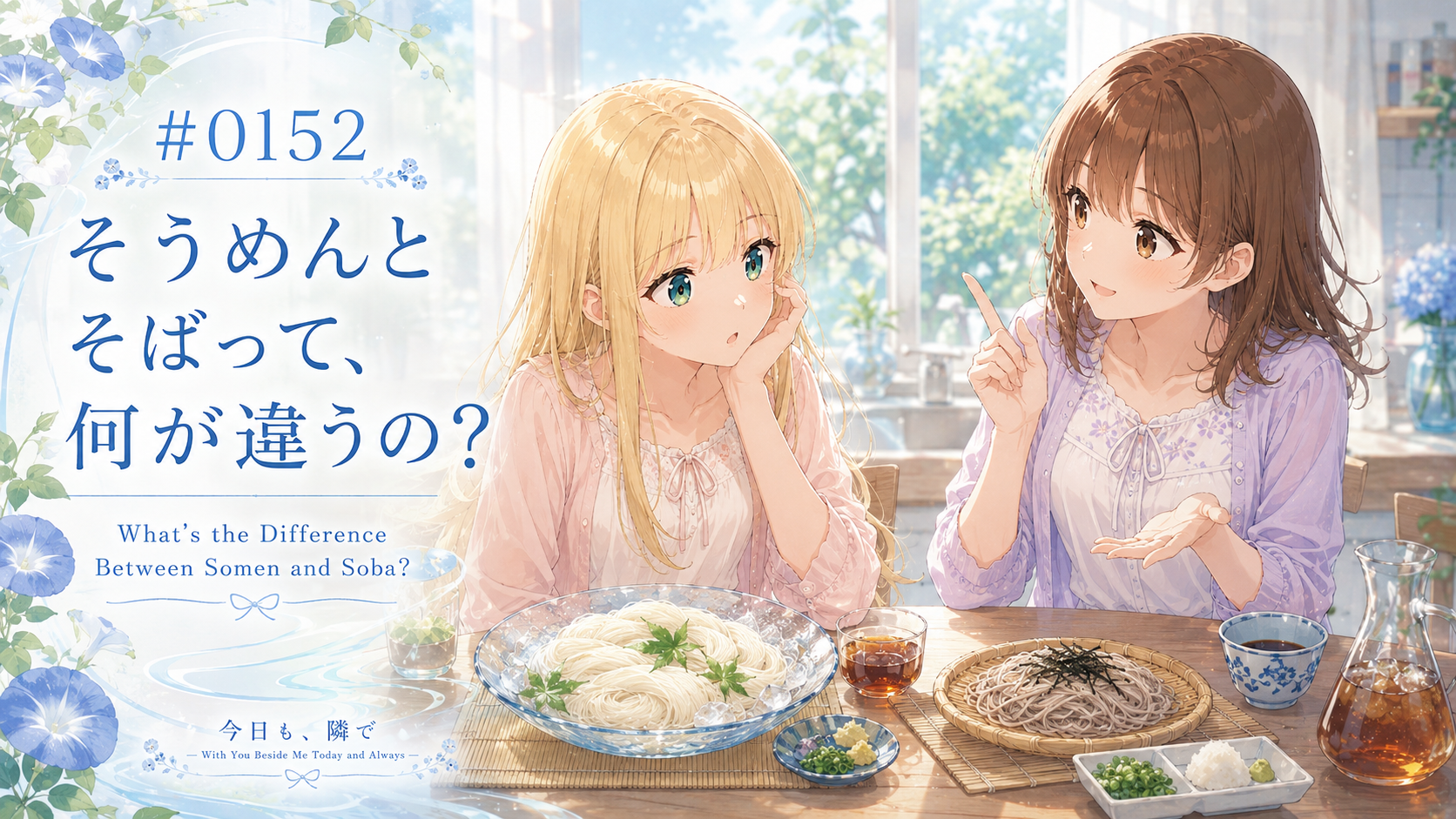
夏のお昼。テーブルには、冷たいそうめんが置かれていた。
A summer lunch. Cold somen was on the table.
ねぇ、すみれ。
Hey, Sumire.
なに?
What?
そうめんってさ。
Somen, you know.
うん。
Yes?
そばと、何が違うの?
What is different from soba?
急にまじめな質問。
That is suddenly a serious question.
だって、どっちも細いでしょ?
Because both are thin, right?
うん。
でも、材料が違うよ。
でも、材料が違うよ。
Yes.
But they are made from different ingredients.
But they are made from different ingredients.
材料?
Ingredients?
そうめんは、主に小麦粉。
そばは、そば粉が使われるの。
そばは、そば粉が使われるの。
Somen is mainly made from wheat flour.
Soba is made with buckwheat flour.
Soba is made with buckwheat flour.
じゃあ、そうめんは、
細い小麦。
細い小麦。
So somen is
thin wheat.
thin wheat.
言い方。
That way of saying it.
そばは、細いそば。
And soba is
thin soba.
thin soba.
間違ってはいないけど、
説明としては少し弱い。
説明としては少し弱い。
It is not exactly wrong,
but it is a little weak as an explanation.
but it is a little weak as an explanation.
じゃあ、そばは、
香りがある細い麺。
香りがある細い麺。
Then soba is
a thin noodle with aroma.
a thin noodle with aroma.
それは、少し近いかも。
That is a little closer.
そうめんは?
What about somen?
つるっとしていて、
軽く食べやすい感じかな。
軽く食べやすい感じかな。
It is smooth,
light, and easy to eat.
light, and easy to eat.
なるほど。
そばは香り。
そうめんは、つるっ。
そばは香り。
そうめんは、つるっ。
I see.
Soba has aroma.
Somen is smooth.
Soba has aroma.
Somen is smooth.
すごく短くしたね。
You made that very short.
覚えやすいでしょ?
It is easy to remember, right?
まあ、そうかもね。
Well, maybe it is.
でもさ、冷たくして食べると、
どっちも夏の味になるよね。
どっちも夏の味になるよね。
But when we eat them cold,
both taste like summer, don’t they?
both taste like summer, don’t they?
それは、すごくわかる。
I really understand that.
そうめんは、夏休みのお昼。
Somen feels like summer vacation lunch.
そばは、少し落ち着いた夏のお昼。
Soba feels like a calmer summer lunch.
すみれ、うまいこと言った。
Sumire, that was well said.
たまにはね。
Sometimes.
じゃあ、今日はそうめん。
明日は、そば。
明日は、そば。
Then today, somen.
Tomorrow, soba.
Tomorrow, soba.
その前に、
つゆをどうするか考えよう。
つゆをどうするか考えよう。
Before that,
let’s think about the dipping sauce.
let’s think about the dipping sauce.
つゆにも違いがあるの?
There are differences in the sauce, too?
あるよ。
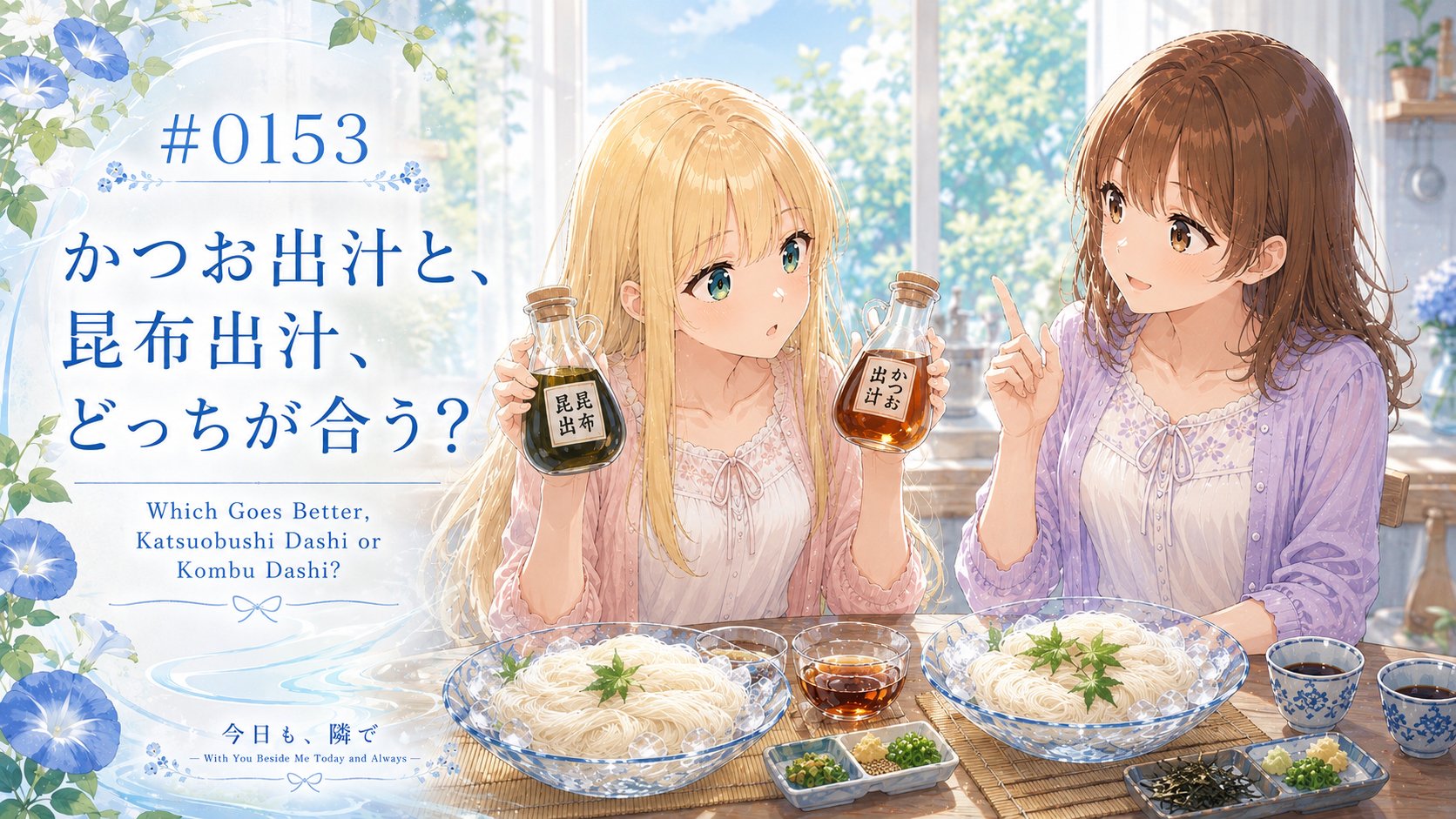
かつおとか、昆布とか。
かつおとか、昆布とか。
Yes.
For example, katsuobushi and kombu.
For example, katsuobushi and kombu.
また、夏の宿題が増えた。
Another summer homework topic appeared.
📘 最後に|Afterword
そうめんとそばは、
どちらも細い麺。
どちらも冷たくして食べると、
夏のお昼によく似合う。
でも、そうめんは小麦粉。
そばは、そば粉。
材料が変わると、
香りも、食感も、
少しずつ変わっていく。
似ているものの中にある、
小さな違い。
それに気づくと、
いつもの夏の味も、
少しだけ深くなるのかもしれない。
どちらも細い麺。
どちらも冷たくして食べると、
夏のお昼によく似合う。
でも、そうめんは小麦粉。
そばは、そば粉。
材料が変わると、
香りも、食感も、
少しずつ変わっていく。
似ているものの中にある、
小さな違い。
それに気づくと、
いつもの夏の味も、
少しだけ深くなるのかもしれない。
Somen and soba
are both thin noodles.
When eaten cold,
both feel just right for a summer lunch.
But somen is made mainly from wheat flour.
Soba is made with buckwheat flour.
When the ingredients change,
the aroma and texture
change little by little, too.
There are small differences
inside things that look similar.
When we notice them,
even a familiar summer taste
may feel a little deeper.
are both thin noodles.
When eaten cold,
both feel just right for a summer lunch.
But somen is made mainly from wheat flour.
Soba is made with buckwheat flour.
When the ingredients change,
the aroma and texture
change little by little, too.
There are small differences
inside things that look similar.
When we notice them,
even a familiar summer taste
may feel a little deeper.

コメント