📖 Study Guide
Learn Japanese through stories.
These stories include Japanese culture,
daily life, travel experiences,
and conversations between people.
1. Read the English text.
2. Read the Japanese text.
3. Use Romaji if needed.
4. Review the vocabulary.
🌸 Story

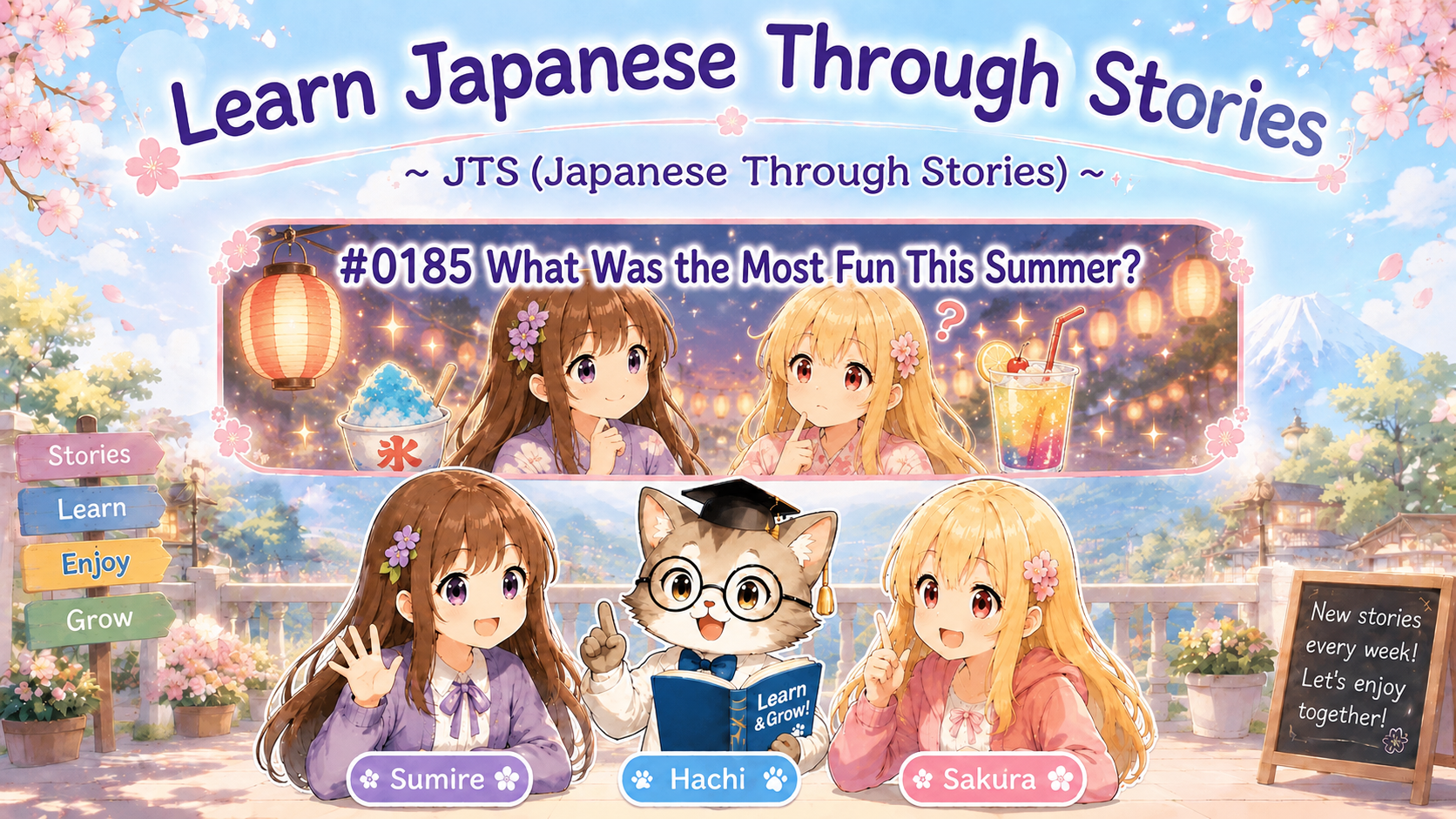
What was the most fun
this summer?
今年の夏、
何が一番楽しかった?
Kotoshi no natsu,
nani ga ichiban tanoshikatta?

Hmm…
うーん……
Uun…
We wore yukata, too! 😊
浴衣も着たー😊
Yukata mo kitaa. 😊
at the department store food hall, too.
ジュースも飲んだね。
juusu mo nonda ne.
It was so good. 😊
おいしかったなぁ😊
Oishikatta naa. 😊
shaved ice, remember?
かき氷も食べたでしょ?
kakigoori mo tabeta desho?
which one was the best? 😊
どれが一番?😊
dore ga ichiban? 😊
The summer festival was fun…
The juice was delicious…
And the shaved ice…
夏祭りも楽しかったし……
ジュースもおいしかったし……
かき氷も……
Natsumatsuri mo tanoshikatta shi…
Juusu mo oishikatta shi…
Kakigoori mo…
So, which one was the best after all?
で、結局どれが一番?
De, kekkyoku dore ga ichiban?
I can’t choose.
They were all fun! 😤
選べないよー。
全部楽しかったんだもーん😤
Erabenai yoo.
Zenbu tanoshikattan da moon. 😤
💭 Story Note
At the end of summer, people often look back on seasonal experiences such as summer festivals, wearing yukata, and eating kakigoori, or shaved ice.
In this story, Sakura is asked what was “ichiban tanoshikatta” — the most fun. Japanese often uses “ichiban” before an adjective to mean “the most.” But when every memory feels special, choosing only one can be difficult.
📚 Vocabulary
Here are some words and expressions from this story about summer memories and choosing a favorite.
| English | Japanese | Romaji |
|---|---|---|
| summer festival | 夏祭り | natsumatsuri |
| shaved ice | かき氷 | kakigoori |
| the most / number one | 一番 | ichiban |
| fun / enjoyable | 楽しい | tanoshii |
| to choose | 選ぶ | erabu |
The verb 選ぶ(えらぶ/erabu) means “to choose” or “to select” from two or more possibilities.
For example:
「好きな色を選んでね。」
Suki na iro o erande ne.
“Choose a color you like.”
In the story, Sakura says:
「選べないよー。」
Erabenai yoo.
“I can’t choose.”
選べない is the negative potential form of 選ぶ. It means that choosing is not possible — sometimes because every option feels equally good.
🔰 Mix Words and Feel Their Meaning|ことばを混ぜて、感覚をつかもう
Today’s word is 選ぶ(erabu), meaning “to choose.”
Try mixing it into an English sentence first:
・Which snack should I 選ぶ today?
・Please 選ぶ one color you like.
・They all look good, so I can’t 選ぶ just one.
The mixed sentences may sound unusual, and that’s okay. The goal is to feel how 選ぶ works before making a complete Japanese sentence.
If someone asks what 選ぶ means, try explaining it in your own words:
“It means choosing one thing from several possibilities.”
コメント