
📖 Study Guide
Learn Japanese through stories.
These stories include Japanese culture,
daily life, travel experiences,
and conversations between people.
1. Read the English text.
2. Read the Japanese text.
3. Use Romaji if needed.
4. Review the vocabulary.
🌸 Story
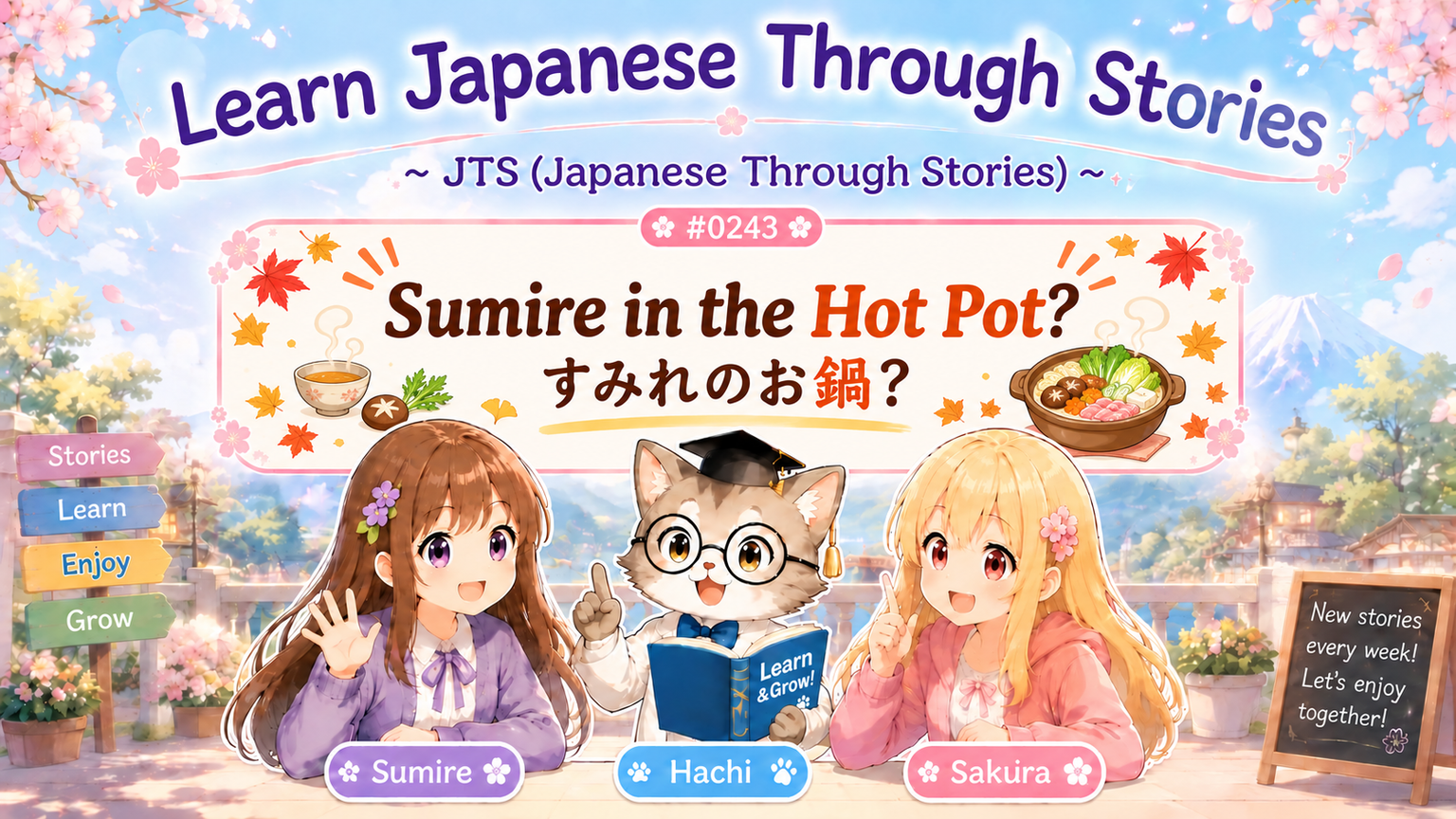
Sakura and Sumire are sitting around a hot pot.
さくらとすみれが、お鍋を囲んでいる。
Sakura to Sumire ga, onabe o kakonde iru.

That was delicious! 😆
おいしかったねー!😆
Oishikatta nee! 😆

It warmed us right up. ☺️
体もぽかぽかになったね。☺️
Karada mo pokapoka ni natta ne. ☺️
Let’s finish with our last course!
そろそろ締めにしようよ!
Sorosoro shime ni shiyou yo!
How about ramen noodles today?
今日はラーメンにしようか。
Kyou wa raamen ni shiyou ka.
Ramen noodles really go well with miso broth! 🍜
やっぱり、味噌味にはラーメンだよね!🍜
Yappari, misoaji ni wa raamen da yo ne! 🍜
Then I’ll add the noodles.
じゃあ、麺を入れるね。
Jaa, men o ireru ne.
Let’s add some rice after that, too! 😆
そのあと、ご飯も入れようよ!😆
Sono ato, gohan mo ireyou yo! 😆
Rice porridge after ramen!? 💦
ラーメンのあとに雑炊!?💦
Raamen no ato ni zousui!? 💦
It’s ramen and rice! 🤣
ラーメンライスだよー!🤣
Raamen raisu da yoo! 🤣
Well, I guess you’re right!
確かに、そうだけど!
Tashika ni, sou da kedo!
So when does the meal actually end? 🤔
それって、いつ終わるのかな?🤔
Sore tte, itsu owaru no kana? 🤔
💭 Story Note
### What Is “Shime” in Japanese Hot Pot?
In Japan, people often finish a hot pot meal with something called “shime” (締め).
Shime means the final part of a meal.
After eating the meat and vegetables, the broth is full of delicious flavors from all the ingredients.
Instead of throwing it away, people often add rice or noodles to enjoy those flavors until the very end.
### Ramen or Zosui?
The type of shime often depends on the flavor of the hot pot.
Ramen noodles are a popular choice for miso-flavored broth.
Another favorite is “zosui” (雑炊), a Japanese rice porridge made by cooking rice in the remaining broth.
Some people add an egg to make it even more comforting.
### Can You Have Two Shime?
Usually, people choose one way to finish their hot pot.
But in this story, Sakura wants ramen first and zosui afterward!
It’s a funny idea because “shime” is supposed to be the ending.
And yet, Sakura wants another ending! 🤣
📚 Vocabulary
Here are five useful words and expressions from today’s story.
They are often used when talking about Japanese hot pot meals and enjoying food together.
| English | Japanese | Romaji |
|---|---|---|
| the final course of a meal | 締め | shime |
| hot pot | お鍋 | onabe |
| miso flavor | 味噌味 | misoaji |
| rice porridge | 雑炊 | zousui |
| to be full | お腹がいっぱい | onaka ga ippai |
The Japanese word “shime” (締め) means the final part of something.
When talking about food, it often refers to the last dish of a meal.
For example, after enjoying a hot pot, people might add noodles or rice to the remaining broth.
This final dish is called “shime.”
You can also hear the word when people are deciding how to end a meal together.
For example:
「そろそろ締めにしよう。」
Sorosoro shime ni shiyou.
Let’s have our final course soon.
「締めはラーメンにしよう!」
Shime wa raamen ni shiyou!
Let’s finish with ramen!
The word has a feeling of bringing something to a close.
That’s why Sakura’s idea of having another shime after the first one is so funny! 🤣
🔰 Mix Words and Feel Their Meaning|ことばを混ぜて、感覚をつかもう
Today’s Japanese word is “締め” (shime).
It refers to the final dish that brings a meal to a close.
Let’s try mixing “締め” into everyday English sentences! 😊
① Let’s have ramen for our 締め tonight!
② I’m still hungry. Can we have another 締め?
③ This rice porridge is the perfect 締め! 🍲
These sentences mix English and Japanese on purpose.
You don’t need to speak perfect Japanese yet.
Just imagine enjoying the last dish of a meal.
Can you explain what “締め” means in your own words?
That’s how a new word starts to feel familiar. 🌸
コメント