📖 Study Guide
Learn Japanese through stories.
These stories include Japanese culture,
daily life, travel experiences,
and conversations between people.
1. Read the English text.
2. Read the Japanese text.
3. Use Romaji if needed.
4. Review the vocabulary.
🌸 Story

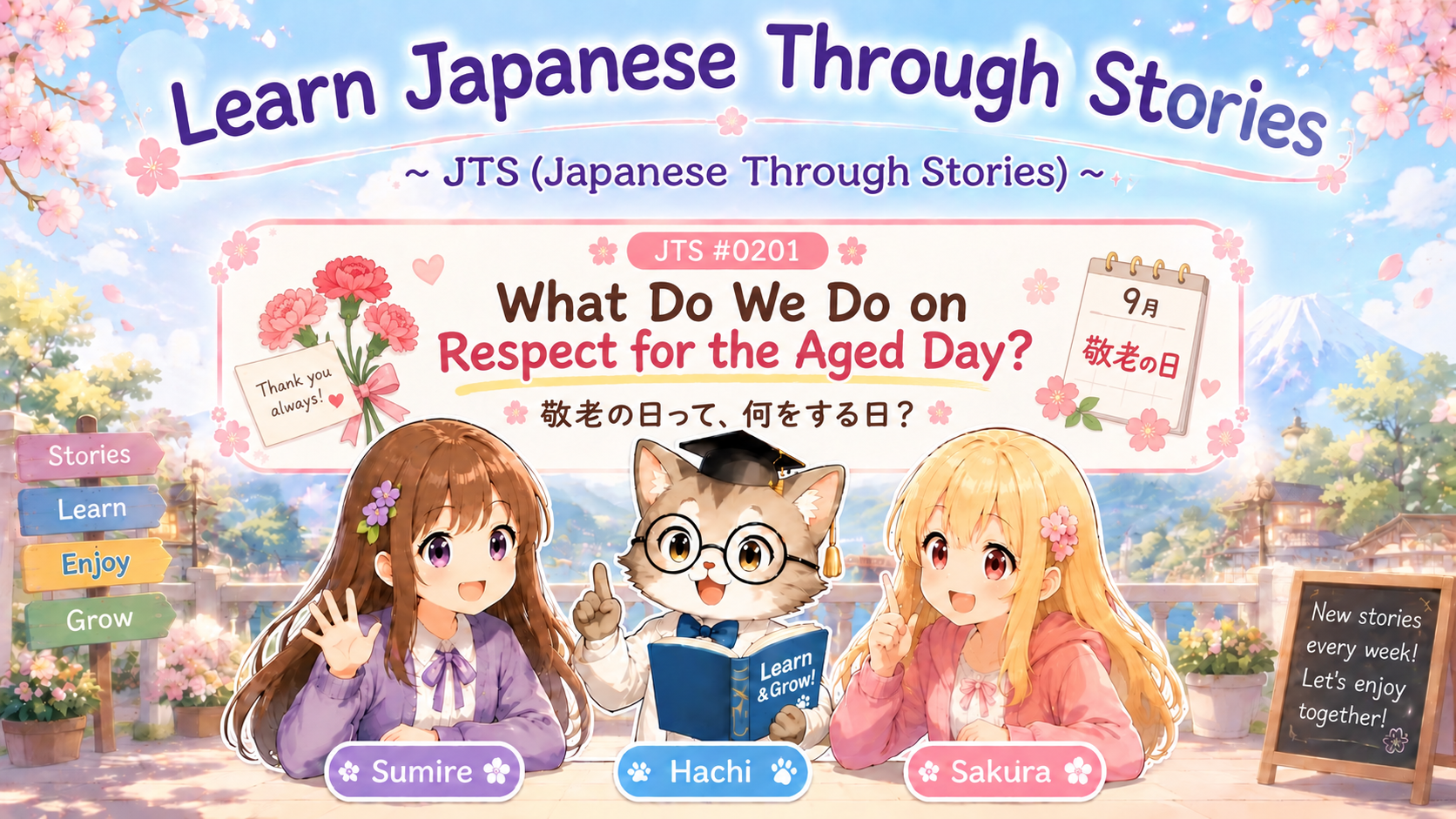
Respect for the Aged Day is coming soon.
もうすぐ敬老の日だね。
Mō sugu Keirō no Hi da ne.

on Respect for the Aged Day?
何をする日なんだろう?
nani o suru hi nan darō?
to say “thank you”
to our grandparents?
「ありがとう」って伝えたりする日じゃない?
“arigatō” tte tsutaetari suru hi janai?
But…
At what age
does someone become “elderly”?
でもさ……
何歳から「敬老」なの?
Demo sa…
Nansai kara “keirō” na no?
I wonder what age it is.
何歳なんだろう。
Nansai nan darō.

there is no rule saying
what age “elderly” begins
for Respect for the Aged Day, nya.
It is a Japanese national holiday
for honoring people
who have contributed to society for many years
and celebrating their long lives, nya.
敬老の日に「何歳から」という
決まりはないにゃ。
敬老の日は、
長く社会に尽くしてきた人を敬い、
長寿をお祝いする日として
日本の祝日になっているにゃ。
Keirō no Hi ni “nansai kara” to iu
kimari wa nai nya.
Keirō no Hi wa,
nagaku shakai ni tsukushite kita hito o uyamai,
chōju o oiwai suru hi to shite
Nihon no shukujitsu ni natte iru nya.
it’s not a day
to draw a line based on age.
年齢で線を引く日じゃないんだ。
nenrei de sen o hiku hi janai n da.
What matters is
showing respect to people
who have lived long lives
and expressing your gratitude, nya.
大切なのは、
長い人生を歩んできた人を敬って、
感謝の気持ちを伝えることにゃ。
Taisetsu na no wa,
nagai jinsei o ayunde kita hito o uyamatte,
kansha no kimochi o tsutaeru koto nya.
maybe we don’t have to do
anything special?
何か特別なことをしなくてもいいのかな?
nanika tokubetsu na koto o shinakute mo ii no kana?
You can visit them,
call them,
or simply say “thank you.”
There are many ways
to show how you feel, nya.
会いに行ったり、
電話をしたり、
「ありがとう」と伝えたり。
気持ちの伝え方はいろいろあるにゃ。
Ai ni ittari,
denwa o shitari,
“arigatō” to tsutaetari.
Kimochi no tsutaekata wa iroiro aru nya.
having a meal together
would be nice too. 😊
一緒にご飯を食べるのもいいね😊
issho ni gohan o taberu no mo ii ne. 😊
Maybe being able
to spend time together
means more than receiving something.
何をしてもらうかより、
一緒に過ごせることの方が
嬉しいかもしれないね。
Nani o shite morau ka yori,
issho ni sugoseru koto no hō ga
ureshii kamo shirenai ne.
comes once a year.
Even without a special gift,
a simple “thank you”
may become a precious gift of its own.
特別な贈り物がなくても、
「ありがとう」のひと言が、
大切な贈り物になるのかもしれない。
Tokubetsu na okurimono ga nakute mo,
“arigatō” no hitokoto ga,
taisetsu na okurimono ni naru no kamo shirenai.
💭 Story Note
Respect for the Aged Day is a national holiday in Japan.
It is a day to show respect and gratitude to older people
and to celebrate their long lives.
There is no official age that tells someone,
“You are now old enough for Respect for the Aged Day.”
Families may celebrate in different ways.
Some visit their grandparents,
share a meal,
make a phone call,
or give a small gift.
The important part is not the gift itself,
but taking time to say “thank you”
and showing that you care.
📚 Vocabulary
Here are some words and expressions from this story.
They are useful when talking about Respect for the Aged Day, gratitude, and spending time with people you care about.
| English | Japanese | Romaji |
|---|---|---|
| Respect for the Aged Day | 敬老の日 | keirō no hi |
| to respect / to honor | 敬う | uyamau |
| long life / longevity | 長寿 | chōju |
| feeling of gratitude | 感謝の気持ち | kansha no kimochi |
| to spend time together | 一緒に過ごす | issho ni sugosu |
🔰 Mix Words and Feel Their Meaning|ことばを混ぜて、感覚をつかもう
Today’s phrase is 「感謝の気持ち」.
Try mixing it into English:
“I want to show my 感謝の気持ち today.”
“Spending time together can also show 感謝の気持ち.”
“Sometimes saying ‘thank you’ is enough to express 感謝の気持ち.”
The goal is not to make perfect Japanese.
Think about what 「感謝の気持ち」 feels like.
It is not only the words you say.
It is the feeling of gratitude behind them.

コメント